
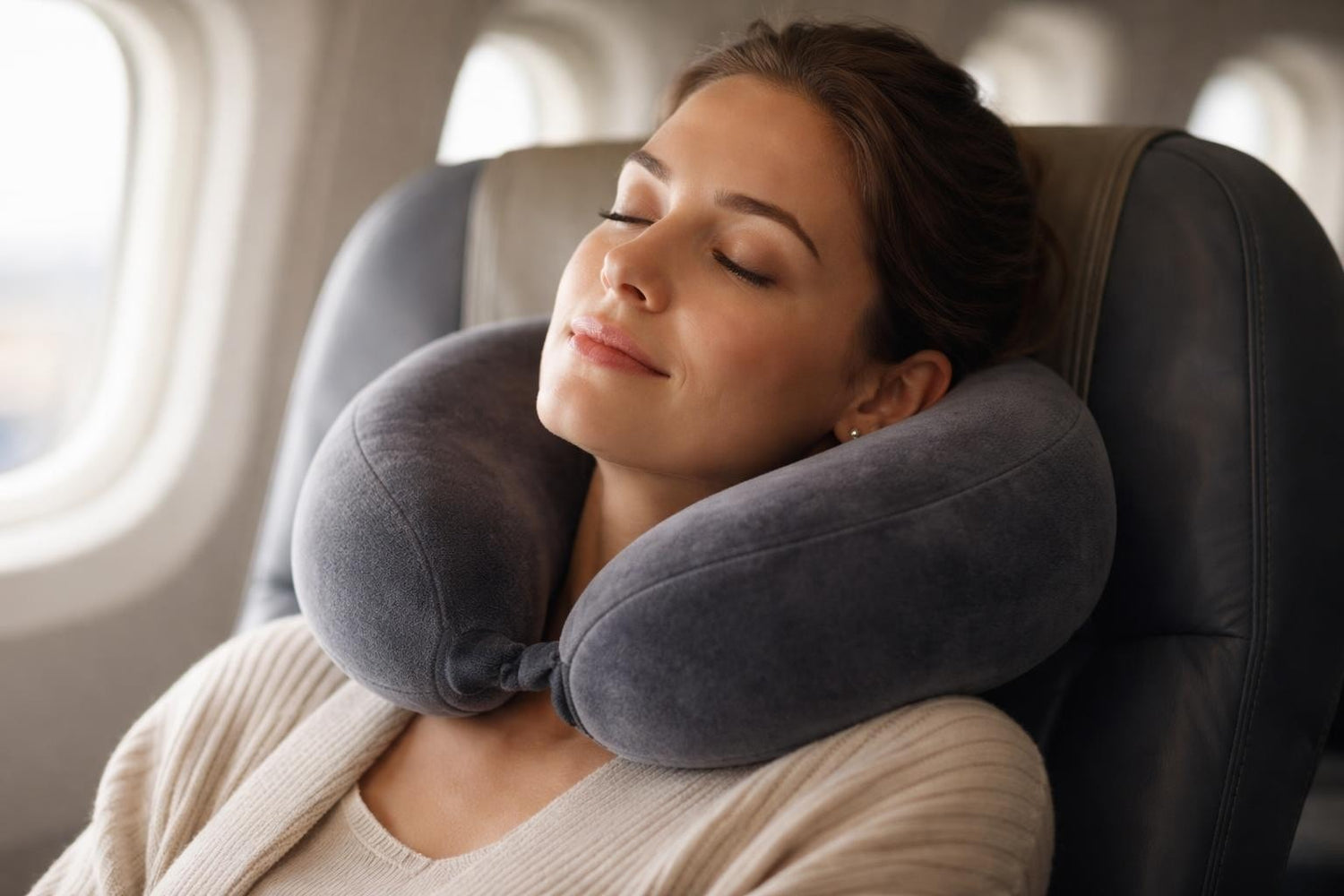
Memory foam travel pillows can be good for neck pain, as long as the one you buy gives your neck proper support and stops your head from dropping into awkward positions while you rest. The biggest benefit is not just the memory foam itself. It's whether the pillow helps keep your neck in a more neutral position during flights, train trips, and long car rides.
When a Memory Foam Travel Pillow Can Help
A memory foam travel pillow is usually most helpful when you are sitting upright for a long time and need support to reduce head wobbling and awkward neck angles. Travel neck pillows are designed to support the cervical spine in a seated position, which is why they can be useful during flights and similar journeys.
It may be worth using one if you often wake up stiff after travelling, struggle to sleep upright without your head dropping to one side, or want something more supportive than a flimsy inflatable pillow. Memory foam tends to hold its shape more consistently than softer fills, which can make support feel more stable over a few hours of use.
When It Might Not Help
A memory foam travel pillow is not guaranteed to help every person or every type of neck pain.
If the pillow is too high, too low, too soft or just the wrong shape for the way you sleep, it can still put your neck in a strained position. Advice on pillow choice for neck pain stresses that your head should stay in a neutral position, not be pushed too far forward, upward or downward.
It also will not fix an underlying neck problem on its own. If someone already has a neck injury, persistent nerve pain or a more serious cervical issue, a travel pillow may make the trip more comfortable, but it is not treating the cause.
How Does Memory Foam Technology Work for Travel Pillows?
Memory foam, originally developed by NASA in the 1960s for aircraft cushioning, has revolutionised the way we think about support and comfort. This viscoelastic polyurethane material exhibits unique properties that make it particularly valuable for neck support during travel.
Memory foam responds to pressure and body heat, which helps it contour more closely to the shape of your neck. In a travel pillow, that can mean more even support and fewer pressure points than softer fillings that flatten quickly. The main advantage is not that it feels fancy. It is that it may hold your neck in a more stable position while you rest upright.
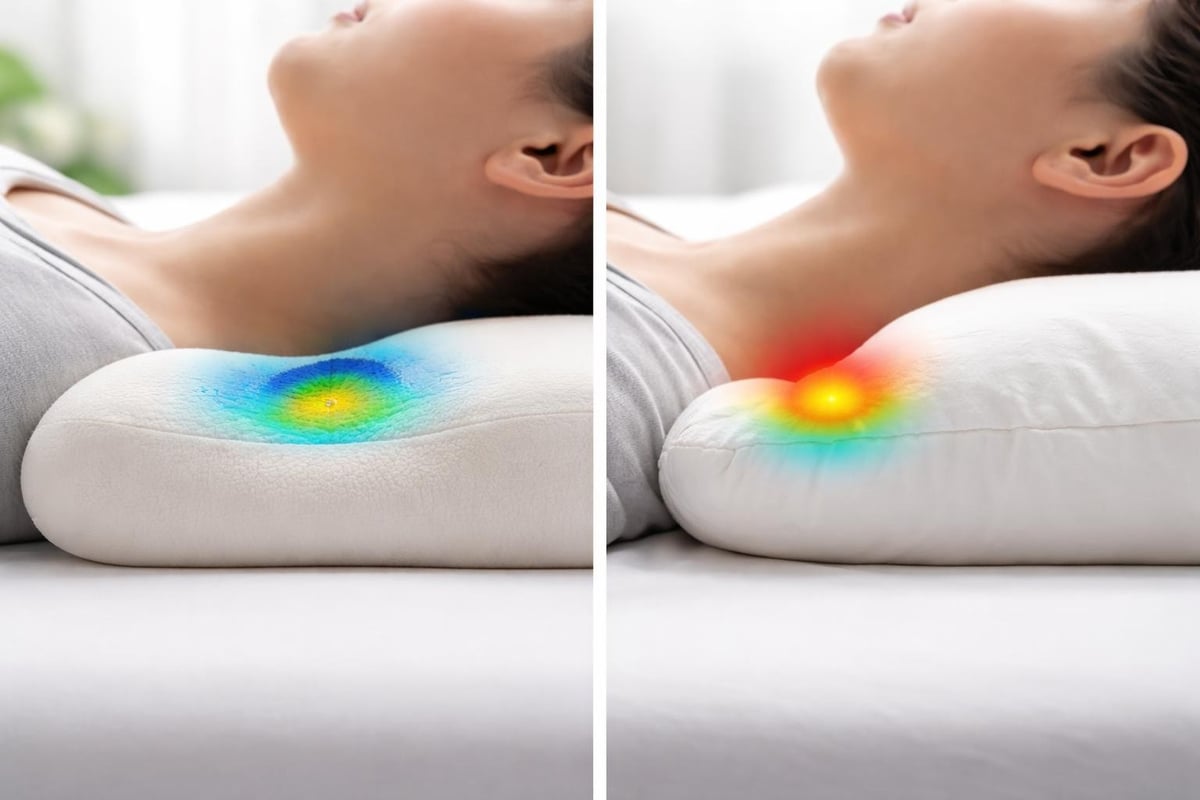
Types of Travel Pillows and How They Compare for Neck Pain
Not all travel pillows are created equal. Some travel pillows are much better than others if neck pain is your main concern.
U-shaped travel pillows
This is the standard travel pillow most people picture. It wraps around the neck and can provide all-round cushioning, which makes it a decent all-purpose option for planes, trains and car trips as a passenger.
For neck pain, though, the results can be mixed. A well-made U-shaped pillow can reduce side-to-side wobbling, but softer or lower-profile versions may still let your head fall forward. That matters because support is most useful when it helps keep your neck closer to neutral, not when it simply feels soft.
Best for: General travellers who change positions a lot
Potential downside: May not give enough structure if you usually nod forward when sleeping upright
Contoured or ergonomic memory foam pillows
Ergonomic memory foam neck pillows have a more shaped design, often with raised sides, a dip for the head or added support under the jaw and neck. They are usually made for people who want more structure than a standard horseshoe pillow provides.
For travellers with neck pain, this type is often the better option because the contoured shape is designed to control head movement a bit more and reduce strain on the neck muscles. Research on neck pain suggests pillow design and height are important factors, which is why a more supportive ergonomic shape may suit some people better than a basic soft pillow.
Best for: Travellers who want firmer support and often wake up with stiffness
Potential downside: Bulkier to pack and not always comfortable for every body shape
Wraparound or scarf-style support pillows
These are less like traditional pillows and more like wearable neck supports. Instead of cushioning the whole neck evenly, they usually support one side of the jaw and neck more firmly.
They can work well for people who tend to lean to one side while sleeping upright, because that side support may help prevent the head from dropping. The trade-off is that they are less flexible if you change positions often. This is more of an ergonomic inference than a hard rule, but the principle fits the broader advice that neck support should minimise awkward bending and keep the head better aligned.
Best for: Side-leaning sleepers on flights
Potential downside: Less versatile than a traditional pillow
Inflatable or very soft compressible pillows
Inflatable travel pillows are popular because they are light and easy to pack, but they are usually the weakest option for people with neck pain. Many lack consistent structure, and that can make it harder to keep the head supported over time.
For someone with an already sensitive neck, portability alone is not enough. If the pillow collapses too easily or shifts around during sleep, it may not offer the kind of stable support that helps reduce morning stiffness. That conclusion follows the broader evidence that proper alignment and pillow structure matter.
Best for: Travellers who care most about saving space
Potential downside: Often the least supportive option for neck pain
Quick comparison
Pillow Type |
Best For |
Neck Support Level |
|---|---|---|
U-Shaped Pillow |
General travel, mixed sleeping positions |
Medium |
Ergonomic Memory Foam |
Travellers wanting more structure |
High |
Wraparound Pillow |
Side-leaning upright sleepers |
High on one side |
Inflatable Pillow |
Saving luggage space |
Low to medium |
Key Benefits of a Memory Foam Travel Pillow for Neck Pain
A good memory foam neck pillow can do more than just make your trip a bit more comfortable. When it fits properly and gives you the right support, it can make it easier to rest, reduce stiffness and make long hours in transit feel more manageable.
Better support while you sleep: Memory foam holds its shape more consistently than many inflatable or overly soft travel pillows. That added stability can help when you are trying to sleep upright on a plane, in the car or on a train.
Less neck and shoulder strain: A supportive pillow can help reduce the awkward head positions that often lead to stiffness during travel. If your head keeps dropping forward or to the side, your neck and shoulders usually feel it later.
More comfort on long trips: Long-haul flights, stopovers and road trips can all take a toll. A memory foam pillow can help by giving your neck more consistent support throughout the journey.
Better shape retention over time: Unlike some cheaper travel pillows that flatten quickly or lose support, memory foam usually holds its shape better with repeated use. That means it is more likely to feel supportive from one trip to the next.
How to Use a Memory Foam Travel Pillow Properly
Even a good pillow can feel useless if it is sitting in the wrong spot.
The aim is to position it so your neck feels supported and your head is less likely to drop forward or too far to one side while you rest. In general, you want the pillow to help limit that kind of movement without forcing your chin too high, pushing your head forward, or creating a strange angle through the neck. The whole point is to keep your neck in a more neutral position, because that is what tends to reduce strain during upright sleep.
It can also take a bit of adjusting to get it right. A pillow that sits too low may leave the upper part of your neck unsupported, while one that sits too high can feel awkward and restrictive. If you are on a plane or train, your seat position can make a difference too. A slight recline often works better than sitting bolt upright, especially on longer trips.
If you still wake up sore, it does not always mean memory foam is the problem. Sometimes the pillow is just in the wrong position. Other times, the shape is not the right match for the way you sleep. That is why fit matters just as much as material.
Selecting the Right Memory Foam Neck Pillow for Your Needs
If neck pain is the main reason you are buying a travel pillow, focus less on marketing claims and more on support, shape, and fit. The right pillow should suit the way you actually sleep while travelling, not just look good on the product page.
Density and Firmness Considerations
Memory foam density directly impacts support level and durability. Higher-density foam (4-5 pounds per cubic foot) offers superior support and longevity but may feel firmer initially. Lower-density options (2-3 pounds) provide softer comfort but compress more readily.
It's also worth thinking about how long you usually travel for. Short domestic flights may require less substantial support than intercontinental journeys lasting twelve hours or more.
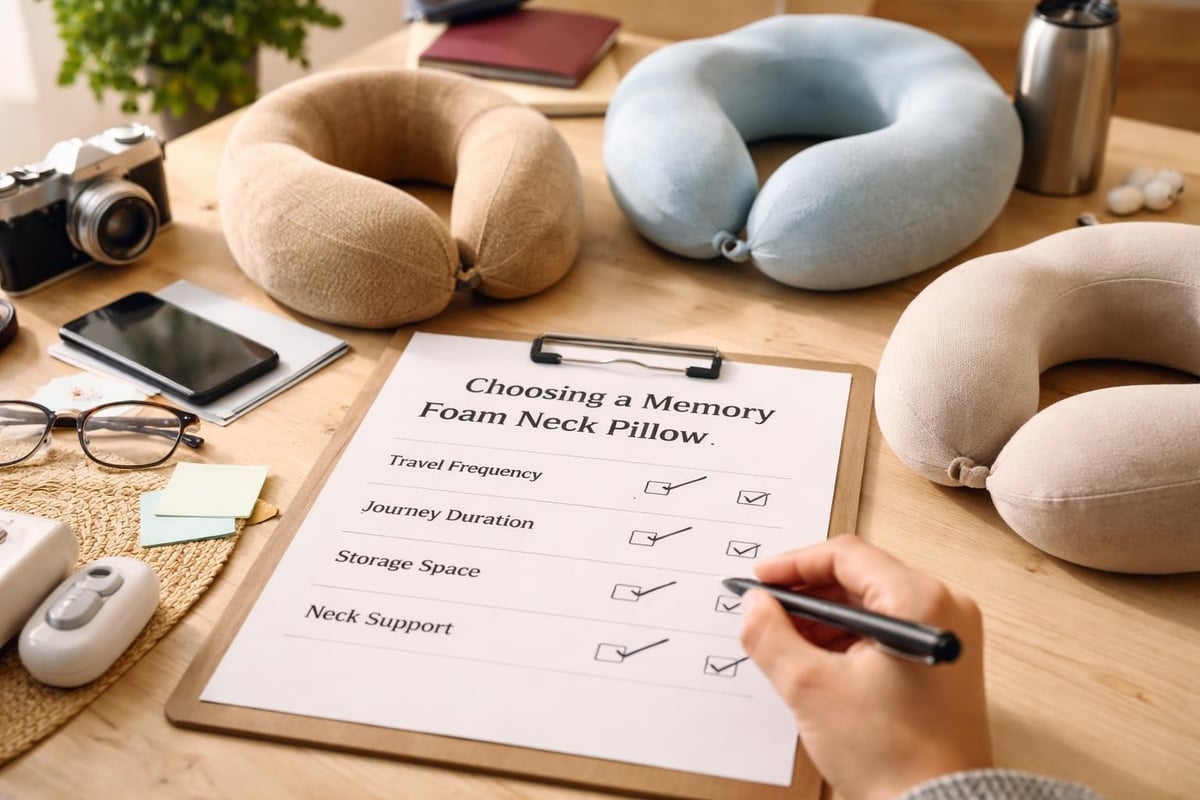
Size and Portability Features
Support matters most, but the pillow still needs to be practical enough that you will actually take it with you. Take into account things like:
Compressed dimensions when stored in carry-on luggage
Weight considerations for backpacking or minimalist travel
Attachment options such as snap buttons or carabiners
Storage bag inclusion for hygiene and organisation
Cover Materials and Breathability
The cover can make a bigger difference than people expect, especially on long trips. Look for covers featuring:
Breathable fabrics like bamboo, cotton, or moisture-wicking synthetics
Removable designs allowing easy washing between trips
Smooth textures that won't irritate skin during extended contact
Secure closures preventing cover shifting during use
Memory foam naturally retains more heat than some alternative materials, making breathable covers particularly important for maintaining comfortable temperature throughout your journey.
Caring for Your Memory Foam Travel Pillow
If you want your memory foam travel pillow to stay supportive and hygienic, a little care goes a long way. Unlike some other travel pillows, memory foam usually cannot just be thrown into the washing machine and forgotten about. It needs a gentler approach.
How to Clean a Memory Foam Travel Pillow
In most cases, the foam itself should not be fully soaked or machine washed. Memory foam can take a long time to dry, and if too much moisture gets trapped inside, it may start to break down or develop a musty smell over time.
A safer option is to spot-clean the foam instead:
Mix a small amount of mild soap with warm water
Lightly dampen a cloth rather than soaking it
Gently blot any marks or dirty areas
Wipe away any soap residue with a clean damp cloth
Leave the pillow to air dry fully in a well-ventilated area, away from direct heat
If your pillow has a removable cover, that part is usually much easier to clean. Many covers can be machine washed on a cold, gentle cycle, but it is still best to check the care label first. Air drying is often the safest option.
A memory foam travel pillow can be a good option for neck pain, but only if it gives you the right support. The material helps, but shape, firmness, and fit matter just as much. If your current travel pillow leaves you waking up stiff or sore, a more supportive memory foam design may be worth considering. At Simplify Living, we offer the Snug™ Travel Pillow for travellers who want a snug, adjustable fit, and the Rebound Moulded Travel Pillow for those who prefer a more structured design with wider support around the neck and upper body.

Leave a comment
This site is protected by hCaptcha and the hCaptcha Privacy Policy and Terms of Service apply.