

One of the easiest things to forget before a trip is also one of the most annoying to deal with once you arrive: will your charger actually fit the wall socket?
It sounds minor until you land, head to your hotel, pull out your phone charger or laptop plug, and realise the outlet is completely different from what you use at home. Suddenly, you’re stuck with a flat battery, no adapter, and no easy way to charge the things you rely on most.
That’s why it helps to check the plug type by country before you travel. Different countries use different plug shapes, different wall outlets, and sometimes different voltages too. So it’s not just about whether your plug fits. It’s also about whether your device can safely handle the local power supply.
How Many Plug Types Are There?
Around the world, there are 15 commonly recognised plug types, labelled A to O. The letter system is widely used in travel and country plug references, and those letters are assigned by the US Department of Commerce International Trade Administration. They’re just identifiers, not a global standard in themselves.
A lot of travellers assume there’s one “Europe plug” and one “Asia plug”, but it’s not that simple. Some regions share similar plug types, but there’s still a lot of variation from one country to the next. The same country list also notes that many countries in Latin America, Africa and Asia use a mix of plug types, and in some places the voltage can even vary by region.
All Plug Types By Country and Where They’re Used
Below is a practical breakdown of all plug types from A to O, along with the countries where they’re commonly used. One important thing to keep in mind: some countries use more than one plug type, and some also use hybrid or universal sockets. So these lists are useful, but you should still double-check the exact setup for your destination before you fly.
Type A
Type A has two flat pins and is most commonly used in the United States, Canada, Mexico and Japan. It is also found across parts of Central America, the Caribbean and sections of South America and Asia. Countries where Type A is commonly used include the United States, Canada, Mexico, Japan, Guatemala, Honduras, Nicaragua, Costa Rica, Panama, Cuba, the Dominican Republic, Jamaica, Colombia, Ecuador, Peru, Taiwan, Thailand, the Philippines and Vietnam. In quite a few of these destinations, Type A appears alongside Type B or Type C rather than on its own.
Type B
Type B is similar to Type A but adds a grounding pin. It is widely used in North America and also appears in parts of Central America, the Caribbean, South America and Asia. Countries where Type B is commonly used include the United States, Canada, Mexico, Japan, Guatemala, Honduras, Nicaragua, Costa Rica, Panama, Cuba, the Dominican Republic, Jamaica, Colombia, Ecuador, Peru, Taiwan, Thailand, the Philippines and Vietnam. Like Type A, it is often used alongside other socket types rather than as the only option.
Type C
Type C is one of the most widely used plug types in the world. It is common across much of continental Europe and also appears throughout parts of Africa, Asia, the Middle East and South America. Countries where Type C is commonly used include France, Germany, Spain, Portugal, Italy, the Netherlands, Belgium, Austria, Greece, Poland, Sweden, Norway, Finland, South Korea, Indonesia, Egypt, Morocco, Turkey, Brazil, Chile, Argentina, Peru and Thailand. In many places, Type C sits alongside Type E, Type F, Type L or other local plug types.
Type D
Type D is most strongly associated with India and is also used in parts of South Asia. Countries where Type D is commonly used include India, Nepal and Sri Lanka. You may also still come across it in a smaller number of mixed-socket destinations, but for most travellers it is best thought of as mainly an Indian subcontinent plug type.
Type E
Type E is used mainly in France and a number of nearby European and African countries. Countries where Type E is commonly used include France, Belgium, Poland, Slovakia, Czechia, Morocco, Tunisia, Algeria, Senegal, Côte d’Ivoire and Madagascar. In many of these destinations, Type E is used alongside Type C.
Type F
Type F is another very common European plug type. It is used across much of continental Europe and also appears in parts of North Africa, the Middle East and Asia. Countries where Type F is commonly used include Germany, Spain, Portugal, the Netherlands, Austria, Greece, Sweden, Norway, Finland, Turkey, Russia, South Korea, Indonesia, Egypt and Morocco. In many of these countries, Type F is used alongside Type C.
Type G
Type G is the three-rectangular-pin plug most people associate with the United Kingdom. It is also used in Ireland, Singapore, Malaysia, Hong Kong, the Gulf states and a number of African countries. Countries where Type G is commonly used include the United Kingdom, Ireland, Singapore, Malaysia, Hong Kong, the United Arab Emirates, Saudi Arabia, Qatar, Kuwait, Oman, Bahrain, Cyprus, Malta, Kenya, Ghana, Nigeria, Uganda, Tanzania, Zambia and Zimbabwe. In some destinations, especially older buildings or mixed-standard locations, other socket types may also appear.
Type H
Type H is much less common globally and is mainly used in Israel and the Palestinian territories. In practice, you will also see Type C mentioned there because some sockets accept both.
Type I
Type I is mainly used in Australia, New Zealand, China and several Pacific nations. It is also used in Argentina. Countries where Type I is commonly used include Australia, New Zealand, China, Argentina, Fiji, Papua New Guinea, Samoa, Tonga, Solomon Islands and Vanuatu. In China and Argentina, other plug types may appear as well, so Type I may not be the only socket style you come across.
Type J
Type J is used almost exclusively in Switzerland and Liechtenstein, so it is one of the least widespread plug types for international travellers.
Type K
Type K is used in Denmark and Greenland. Denmark is also commonly associated with Type C, which is why travellers may see both referenced.
Type L
Type L is most strongly associated with Italy and is also used in Chile. You may also see it referenced for San Marino and Vatican City. In Italy, Type L often appears alongside Type C, and in some cases Type F-compatible sockets may be found as well.
Type M
Type M is mainly used in South Africa. It is less common globally, but travellers can still encounter it there, especially in older or high-current socket setups. In South Africa, it may appear alongside Type C and Type N rather than replacing them completely.
Type N
Type N is used in Brazil and South Africa. Brazil is the main country most travellers associate with Type N, but South Africa also uses it as part of its modern plug landscape. In both countries, it can sit alongside other socket types depending on the building and installation age.
Type O
Type O is officially used in Thailand and is the newest of the commonly referenced domestic plug types. In practice, Thailand is still a mixed-socket destination, and travellers will often come across sockets that also accept Type A, Type B or Type C plugs.
Why Some Countries Have More Than One Plug Type
Not every country uses just one outlet type across the board. Some officially use multiple plug types. China is often listed with Type A and Type I. India is listed with Type D and Type M. Italy is listed with Type C, Type F and Type L. Denmark is listed with Type C, Type F and Type K. Some places, such as Bangladesh, Cambodia, Ghana, Iraq, Jordan and Liberia, are also known for having universal or hybrid sockets in many locations.
This usually happens because older and newer socket standards exist side by side, and not every building or region has been updated in the same way. In some countries, you’ll also find a mix of local standards, imported fittings, and hotel outlets designed to accept more than one plug shape.
For travellers, that doesn’t necessarily mean you need to carry multiple separate adapters. In many cases, one good universal travel adapter will cover the different outlet types you’re likely to come across. The main takeaway is that you shouldn’t assume one country always means one socket style, or that every outlet you find will be the same.
If you’re staying in older hotels, travelling through regional areas, or visiting multiple destinations on one trip, it’s always worth checking the exact plug and socket setup before you go.
How To Choose the Right Travel Adapter
Once you know the socket type by country, the next step is choosing the right adapter.
A regional adapter is great if you’re heading to one place and just want something small, simple, and affordable. If you go to Japan every year and rarely travel elsewhere, a dedicated adapter for that country may be all you need. But if your trip includes multiple countries, or you travel regularly, a universal travel adapter makes more sense.
Instead of carrying a handful of separate adapters for each country's plug type, you’ve got one compact option that can handle a wide range of destinations. That’s especially handy for longer trips, stopovers, and multi-country itineraries.
It’s also worth paying attention to features. Built-in USB ports can make life easier if you’re charging multiple devices. Fast charging is also a must to support modern phones, and built-in surge protection is great especially if you're travelling somewhere with older building and electrical systems. A compact design is nice too, when luggage space is tight. And if you travel often, it’s worth buying a solid adapter once rather than replacing flimsy ones every few trips.
Plug Type Is Only Part of the Story
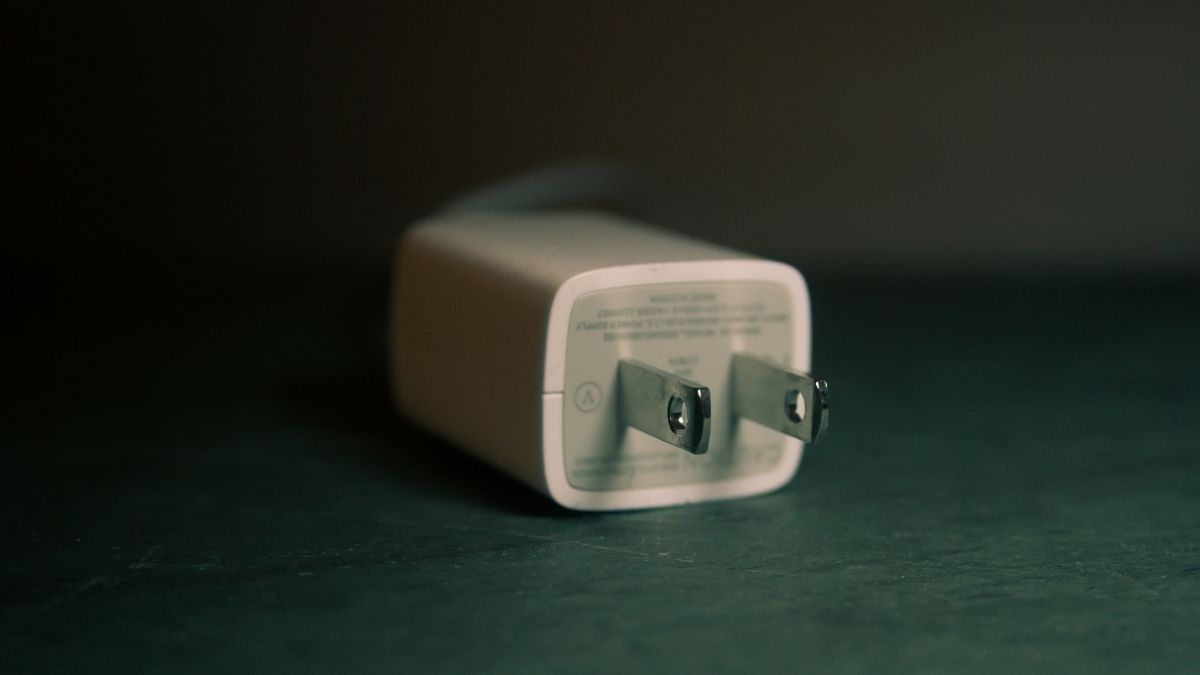
A travel adapter only changes the shape of your plug so it can fit the socket in another country.
What it doesn’t do is change the voltage coming out of the wall.
That’s where people can run into trouble. Many modern electronics, like phone chargers, laptop chargers, camera chargers, and tablets, are dual voltage. That means they’re designed to work across a range of voltages and usually only need the right plug adapter. But some appliances aren’t that flexible.
If your device says something like 100–240V or 110–240V, you’ll usually only need a travel adapter. If it only shows a single voltage, like 220–240V or 110–120V, you need to make sure that matches the local supply. If it doesn’t, you may need a voltage converter.
So before you travel, check two things: the plug type used in your destination, and the voltage your device can handle. One tells you whether your plug will fit. The other tells you whether it’s safe to use once it does.
Do You Need an Adapter or a Converter?
A travel adapter changes the plug shape. A converter changes the electrical voltage.
In many cases, you'll only need an adapter. That’s especially true for phones, laptops, tablets, cameras and other USB-powered devices that are already dual voltage. But if you’re taking appliances that aren’t dual voltage, a converter may be necessary depending on the destination.
Hair straighteners, curling wands, electric shavers and older personal care items are some of the most common problem items. If they’re designed for one specific voltage only, plugging them into the wrong supply can stop them working properly or damage them.
A Simple Way to Prepare Before You Travel
Before you pack, do a quick check for each country on your trip:
Look up the plug type.
Check the local voltage.
Check whether your charger or appliance is dual voltage.
And if you’re visiting more than one country, make sure you’re not assuming they all use the same socket style. That little bit of prep can save you a lot of hassle later.
Final Thoughts
Working out the plug type by country isn’t the most exciting part of planning a trip, but it’s one of those small things that makes travel feel much smoother once you get there.
A few minutes of checking before you leave can help you avoid flat batteries, incompatible plugs, and the frustration of realising your charger doesn’t match the outlet in your hotel room. It also helps you understand whether you’re only dealing with a different socket type, or whether voltage is something you need to think about too.
If you want an easy way to stay prepared across multiple destinations, our Universal Travel Adapter is a handy option to keep in your bag so you’re not scrambling every time you land somewhere new.

Leave a comment
This site is protected by hCaptcha and the hCaptcha Privacy Policy and Terms of Service apply.