
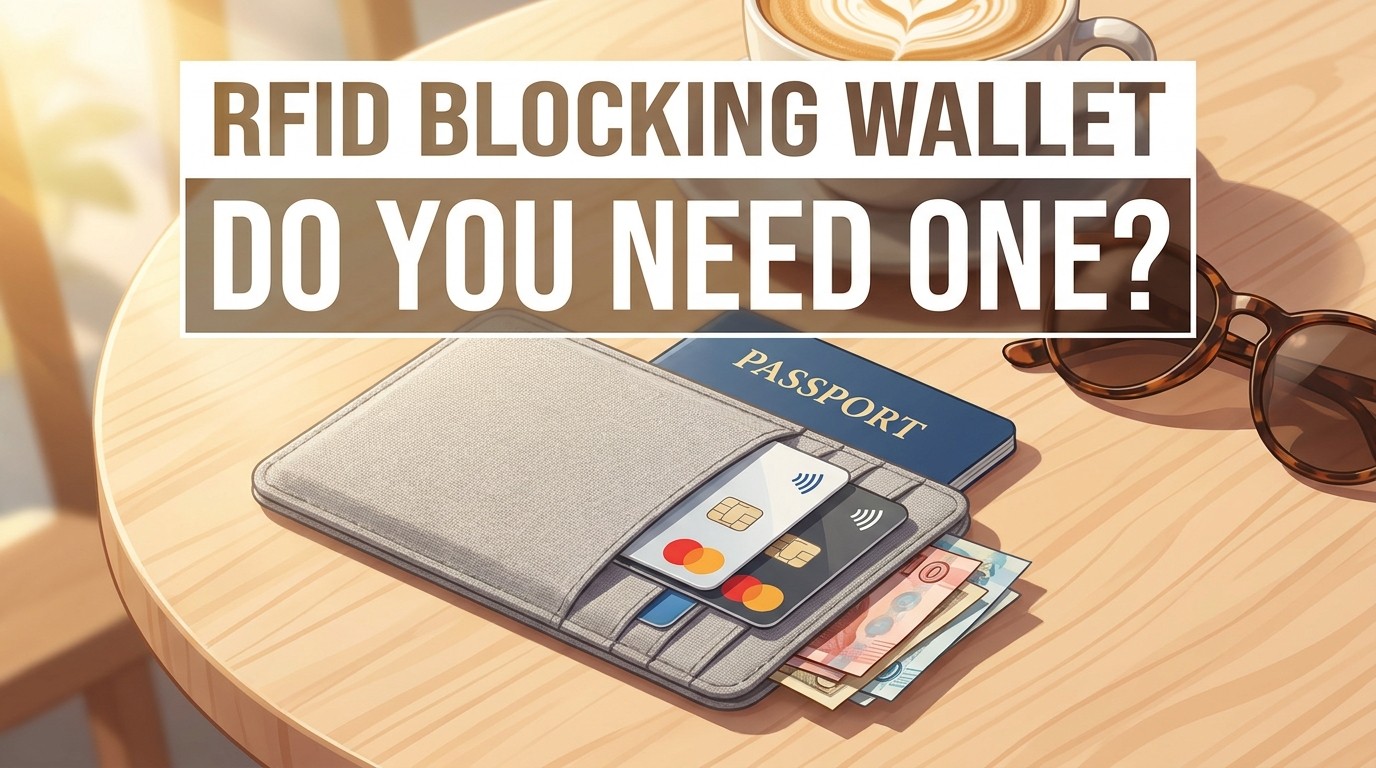
Short answer: an RFID blocking wallet is a small, low-cost layer of protection that's genuinely worth it for most travellers, even though the risk it guards against is relatively rare. If you carry contactless cards and a passport through airports, busy cities and crowded transport, a wallet that blocks wireless scanning buys real peace of mind for very little outlay. Here's when it actually matters, and how to pick one that works.
This is a quick, practical answer to the question we get asked most about travel wallets. If you want the full background on the technology itself, our guide on what RFID protection is covers the how and why in depth; this article stays focused on the wallet.

What an RFID Blocking Wallet Actually Does
Modern bank cards and passports carry a small chip that transmits data wirelessly so you can tap to pay or move quickly through e-gates. An RFID blocking wallet lines its pockets with a metallic shielding material that stops those chips being read by anyone standing nearby with a scanner. In plain terms: your cards stay readable when you take them out to use them, but stay silent while they're in the wallet. If you want the technical detail on how the shielding works, our explainer on what RFID protection is breaks it down.
Do You Really Need One? An Honest Answer
We'll be straight with you: the odds of being targeted by RFID skimming specifically are low, and modern cards have encryption that makes large-scale fraud harder. Traditional theft and online data breaches are far more common. So an RFID wallet is not a must-have in the way a secure bag is.
That said, the protection costs very little, adds no real inconvenience, and removes one more thing to worry about when you're tired and distracted in an unfamiliar place. Think of it like a travel lock or sunscreen: a small, sensible precaution rather than a response to a huge threat. For most travellers, that trade-off is easily worth it.
An RFID blocking wallet makes the most sense if you:
- Travel internationally, especially to crowded cities and tourist hotspots
- Carry several contactless cards plus an e-passport
- Spend time on busy public transport, in markets, or at events
- Simply prefer a proactive, better-safe-than-sorry approach
It matters less if you mostly travel domestically, rely on mobile payments rather than physical cards, or watch your accounts closely with instant transaction alerts. Even then, many people choose one simply because a good travel wallet is worth having anyway, and the RFID lining comes built in.
Wallet, Sleeve or Pouch? Choosing the Right Format
"RFID wallet" covers a few different formats, and the best one depends on how you travel. Here's the quick way to decide.
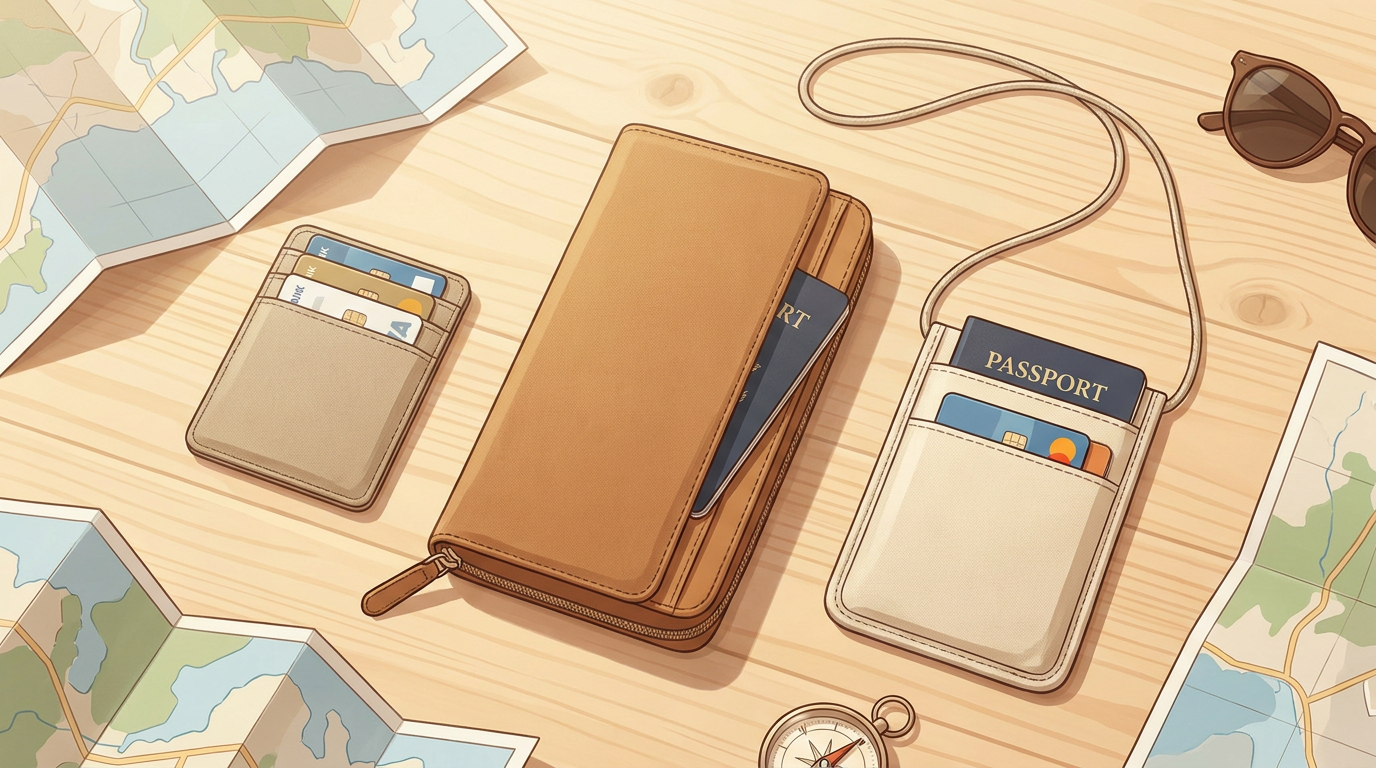
| Type | Best for | Trade-off |
|---|---|---|
| Slim card holder | Everyday carry, minimalists, a few cards | Not enough room for a passport or documents |
| Zip-around travel wallet | Trips abroad; passport, cards and cash together | Bulkier than an everyday wallet |
| Neck wallet or pouch | Worn under clothes for high-risk areas | Slower to access; not for quick daily use |
A single RFID card sleeve protects one card but means removing it every time, which gets tedious. A wallet with RFID-lined pockets is the sweet spot for most people: quick access to the cards you use, full protection for everything inside.
What to Look For in a Good RFID Wallet
Not every wallet with an "RFID" label is built equally. Prioritise these:
- Full-coverage lining. The shielding should line the whole card area, not just one panel, so every card is protected.
- The right capacity. Enough slots for your cards (and a passport, if it's for travel) without forcing you to overstuff it.
- A slim, practical design. Protection only helps if you actually carry it, so look for a profile that suits your bag or pocket.
- Durable construction. Reinforced stitching and quality, water-resistant materials keep the shielding intact over years of trips.
There are good options for everyone, including slimmer styles often searched as a men's or women's RFID wallet, so you can match capacity and size to how you carry.
Our RFID Wallets, by Traveller
Everyday minimalist: Mini RFID Blocking Card Holder

If you just want your cards protected day to day, the Mini RFID Blocking Card Holder holds 12+ cards and cash in a slim, zip-around shape with quick-access slots — ideal as a compact everyday RFID wallet.
Trips abroad: RFID Passport Wallet & Travel Passport Holder

For international travel, the RFID Australian Passport Wallet keeps your passport, boarding pass, cards and cash together with RFID blocking and a slim, water-resistant build. The RFID Travel Passport Holder is a similar option with six card slots, a document sleeve and a detachable wrist strap.
Families: RFID Family Passport Wallet

Travelling as a group? The RFID Family Passport Wallet holds 4+ passports plus cards, cash and tickets, so one person can keep the whole family's documents organised and shielded.
Maximum discretion: RFID Travel Neck Wallet & Pouch

For higher-risk destinations, the RFID Travel Neck Wallet and RFID Anti-Theft Travel Pouch sit discreetly under your clothes on a neck strap, keeping documents close to your body and out of sight.
Frequently Asked Questions
Do RFID blocking wallets actually work?
Yes. Independent testing confirms that quality RFID blocking wallets block the electromagnetic signals used to read card and passport chips, as advertised. The shielding material surrounds your cards so a nearby scanner can't read them while they're inside the wallet.
Do you really need an RFID wallet?
You don't strictly need one, as the risk of RFID skimming is low and modern cards are encrypted. But it's a cheap, no-hassle layer of protection that many travellers value, especially for international trips with multiple cards and a passport. For most people it's a sensible precaution rather than an essential.
What's the difference between an RFID wallet and a regular wallet?
An RFID wallet has a built-in metallic shielding layer that blocks wireless scanning of your cards and passport. A regular wallet offers no such protection, so the chips inside can, in theory, be read by a nearby scanner. Otherwise they look and function much the same.
Is an RFID wallet or sleeve better?
A wallet is usually more practical: it protects all your cards at once and still lets you access them quickly. A sleeve protects a single card but has to be removed each time you use it. For everyday convenience plus full protection, a wallet wins for most travellers.
Are there RFID wallets for both men and women?
Yes. RFID protection isn't gender-specific, and there are slim and larger styles to suit any preference. Choose based on capacity and size rather than label, then keep documents in the concealed compartments. You can browse the full range of RFID travel wallets to find one that fits how you carry.
The Bottom Line
An RFID blocking wallet won't make or break your trip, but it's an easy, inexpensive way to take one worry off the table, and a good travel wallet is worth carrying regardless. Match the format to how you travel, look for full-coverage shielding, and you're set. Browse our full range of RFID travel wallets — every one is backed by free shipping and our 30-day money-back guarantee.

Leave a comment
This site is protected by hCaptcha and the hCaptcha Privacy Policy and Terms of Service apply.