
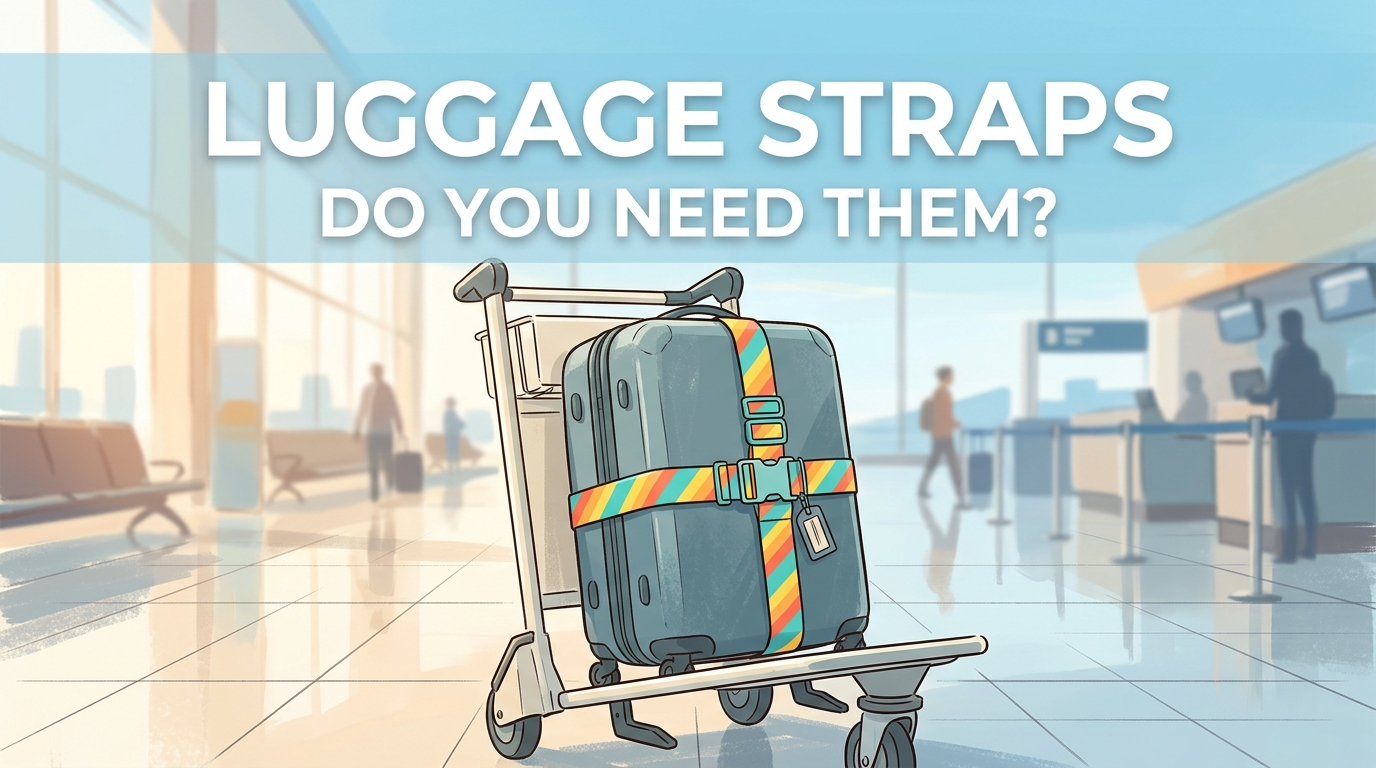
A luggage strap is a simple band that wraps around your suitcase to hold it shut, make it easy to spot, and add a layer of security. It's one of the cheapest pieces of travel gear you can buy, and one of the most quietly useful — the kind of thing you don't think about until a zip bursts on the carousel or two identical black cases turn up at once. This guide covers whether you actually need one, the different types, and how to use one properly.
By the end you'll know which style suits your bag and your travel, what to look for in a good strap (locks, TSA compatibility, adjustability), and the right way to fit one so it stays put. Straps are a small upgrade that solve several travel headaches at once.

Do You Actually Need a Luggage Strap?
For most travellers, yes — a strap earns its place several times over. It does three jobs at once, which is what makes it such good value.
First, it keeps your case shut. Overpacked suitcases put strain on zips and latches, and baggage handling isn't gentle. A strap holds everything together so a failed zip doesn't spill your belongings across the tarmac. Second, it makes your bag easy to spot. A brightly coloured strap turns an anonymous black case into one you can pick out from across the baggage hall in a second, and it stops another traveller grabbing your lookalike bag by mistake. Third, it adds a layer of security — a strapped case is harder to open casually, and a strap with a lock adds a genuine deterrent. Together with a clear luggage tag, a strap is part of the basic kit that keeps your bag identifiable and intact from check-in to carousel. It sits alongside the other small, high-value items in our guide to the best luggage accessories — the sort of gear that costs little but saves a lot of hassle.
The travellers who benefit most are the ones with older or overpacked cases, soft-sided bags that flex under pressure, and plain dark suitcases that are almost impossible to tell apart on a busy carousel. If any of those sounds like your luggage, a strap is close to essential rather than optional.

The Main Types of Luggage Strap
Straps come in a few distinct styles, and the right one depends on your bag and what you want it to do.
Adjustable cross straps
These wrap around the case in both directions, forming a cross on top. They're the most secure option for holding an overpacked or older suitcase together, spreading the tension across the whole case rather than one point. If your main concern is keeping a straining case shut, a cross strap is the strongest choice — the TravelSafe™ Luggage Straps are fully adjustable to fit most suitcase sizes.
Single belt straps
A single belt wraps once around the case, usually with a sturdy buckle and often a combination lock. They're quick to fit, easy to adjust, and the buckle makes a bag noticeably harder to open on impulse. The BagMate Luggage Belt is a solid single-strap option with a secure buckle — a good all-rounder for most travellers.
Elastic add-a-bag straps
Stretchy elastic straps are designed to hold a second, smaller bag onto the handle of your main case so you can wheel both together through the airport. They're less about security and more about convenience — a genuine help when you're juggling a carry-on and a personal item. The Elastic Luggage Fastening Belt does exactly this, freeing up a hand on the way to the gate.

How to Use a Luggage Strap Properly
Fitting a strap takes seconds, but a few small things make the difference between one that holds and one that slips off.
Position it over the strongest part of the case. Run the strap around the middle of the suitcase, over the spine where the case is most rigid, rather than near a corner.
Pull it snug, not loose. A strap should be firm enough that it doesn't slide around, but not so tight it distorts a soft case. Snug is the goal.
Tuck the excess. Feed any leftover strap back through the keeper loop so a long tail can't snag in a conveyor belt — the most common way a strap gets torn off.
Set the lock before you check in. If your strap has a combination lock, set and close it as you hand the bag over, and remember the code.
Check it on arrival. When your bag comes off the carousel, a quick glance confirms the strap is still fastened and nothing has shifted before you leave the airport.
None of this takes more than a few seconds, but it's the difference between a strap that's still doing its job when your bag reaches the other end and one that's been torn away somewhere in the baggage system.
What to Look for in a Good Luggage Strap
Not all straps are built to last. When choosing one, weigh up:
Adjustability. A strap that adjusts across a wide range fits everything from a cabin bag to a large check-in case, so one strap covers your whole set.
Buckle and material quality. A strong buckle and durable webbing are what stop a strap failing under load — the part cheap straps skimp on.
A lock, if you want extra security. A combination lock on the strap adds a deterrent without needing a separate padlock.
High-visibility colour. A bright or distinctive strap is far easier to spot than a dark one, which is half the point.
A note on TSA and locks
If you're travelling to or through the United States, security staff may need to open checked bags for inspection. A TSA-approved lock lets them do this with a master key rather than cutting the lock off. If your strap has a lock and you're flying via the US, choosing a TSA-approved one saves you a damaged strap. For travel that doesn't touch the US, any sturdy lock is fine.
Frequently Asked Questions
Are luggage straps worth it?
For most travellers, yes. A luggage strap keeps an overpacked case from bursting open, makes your bag easy to spot on the carousel, and adds a layer of security — three useful jobs for a very low cost. They're especially worth it for older suitcases with tired zips, soft cases, and plain black bags that are hard to tell apart.
How do you use a luggage strap?
Wrap the strap around the middle of the suitcase over the strongest part of the case, pull it snug but not so tight it distorts the bag, and tuck any excess strap back through the keeper loop so it can't snag. If the strap has a combination lock, set and close it before you check in, and remember the code.
What is the difference between a luggage strap and a luggage belt?
The terms are often used interchangeably. Generally a "cross strap" wraps around the case in both directions for maximum security, while a "belt" wraps once around with a buckle. Both hold the case shut and aid identification; cross straps spread tension more for heavily packed bags, while single belts are quicker to fit.
Do luggage straps need to be TSA approved?
The strap itself doesn't, but if it includes a lock and you're travelling to or through the United States, a TSA-approved lock lets security open and re-lock your bag without cutting it. For travel that doesn't involve the US, any sturdy lock is fine.
Will a luggage strap stop my bag being stolen?
A strap is a deterrent, not a guarantee. It makes a case harder to open casually and, with a lock, adds a genuine barrier — but it's one layer among several. Pair it with a good luggage tag for identification and, for valuables, keep them in your carry-on rather than checked luggage.
A Small Strap, Fewer Travel Headaches
A luggage strap is one of those small buys that quietly prevents several travel problems: a burst case, a misidentified bag, a casually opened zip. Choose the type that matches your bag — a cross strap for holding an overpacked case, a belt for everyday security, or an elastic strap for wheeling two bags at once — fit it snugly over the strongest part of the case, and you've solved all three at once.
Ready to secure your suitcase? The TravelSafe™ Luggage Straps and BagMate Luggage Belt keep your case shut, spotted, and secure — backed by our 2-year warranty, 30-day money-back guarantee, and free shipping, from a proudly Aussie-owned team trusted by over 300,000 travellers. Explore the full luggage protection range to finish your setup.

Leave a comment
This site is protected by hCaptcha and the hCaptcha Privacy Policy and Terms of Service apply.