
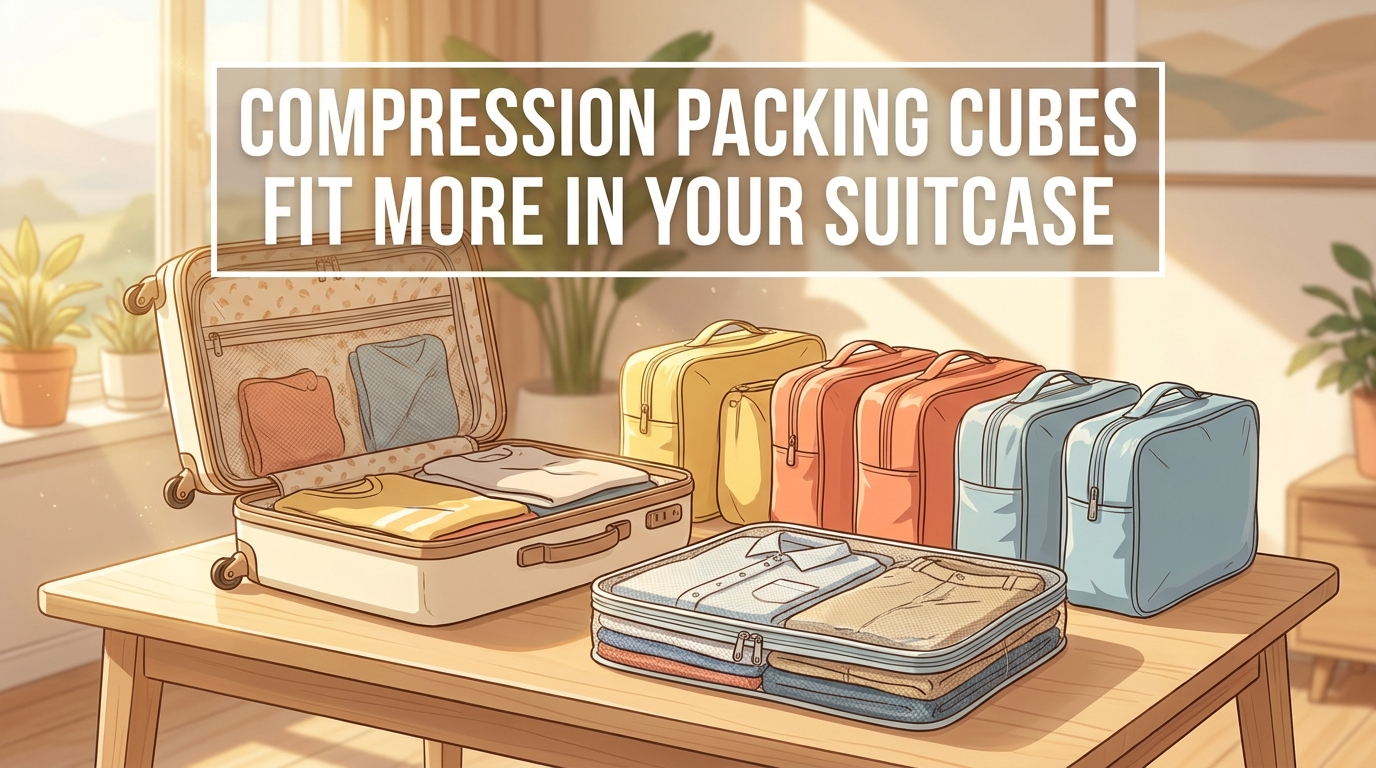
Compression packing cubes are a type of travel organiser that removes excess air from your clothes to reduce the volume they take up in your suitcase. Unlike standard packing cubes, which simply contain your clothes, compression cubes use a dual-zip system — one zip to seal the cube, one to compress it — letting you fit significantly more into the same amount of luggage space. For travellers who want to pack smarter without checking a bag, they're one of the most practical upgrades you can make.
Quick summary: Compression packing cubes organise and compress your clothes using a double-zip mechanism, reducing volume by up to 60%. They work best when each cube is dedicated to a specific clothing category — tops, bottoms, underwear, socks, and bulkier items like hoodies.
This guide is part of our packing-organisation series. If you're still deciding which system suits you, see our full guide to luggage cubes for packing and our comparison of compression bags for travel.
How Compression Packing Cubes Actually Work
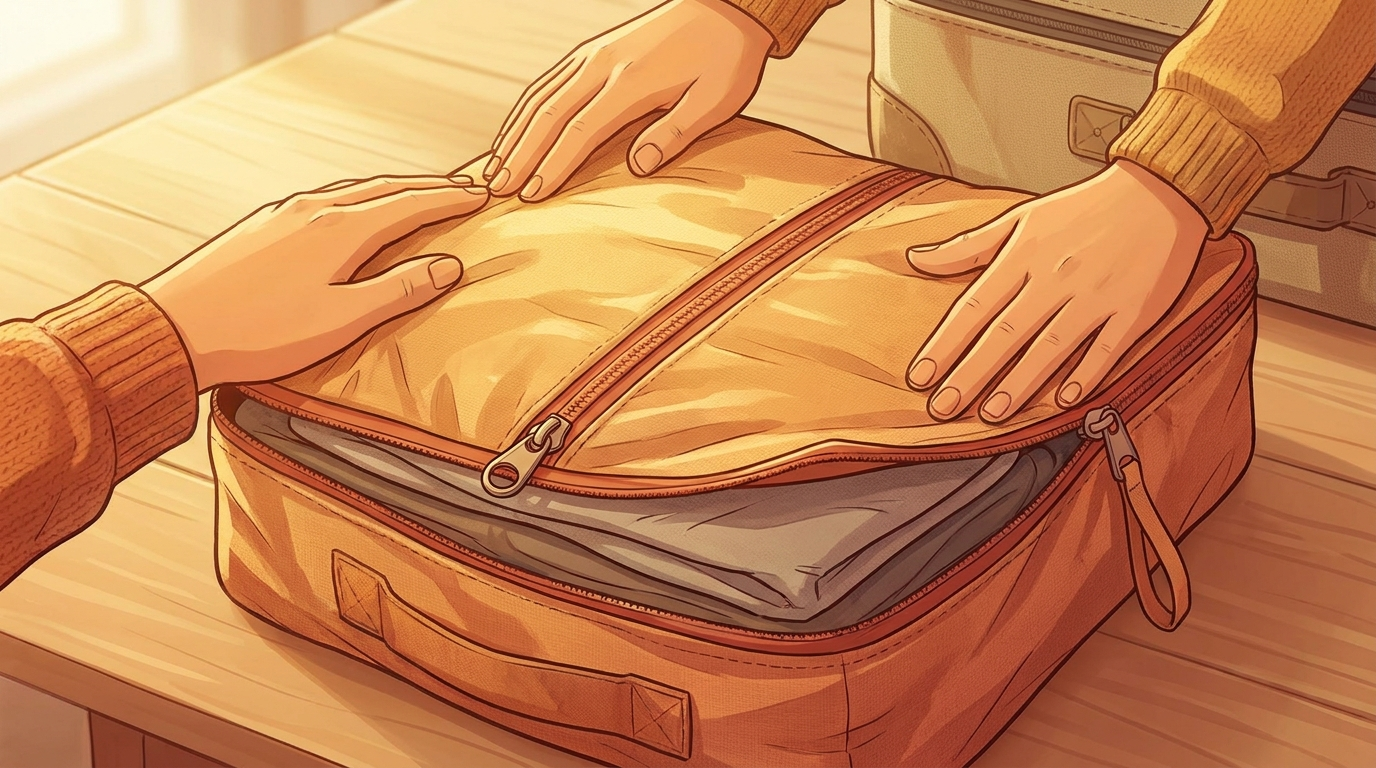
A compression packing cube has two separate zip tracks running around the outside. The first zip seals your clothes inside the cube — just like a regular packing cube. The second zip is the compression mechanism. Once you close the first zip, you press down firmly on the top of the cube to push out trapped air, then close the compression zip to lock the reduced shape in place.
The result is a cube that's noticeably flatter and denser than when you started — which means more space in your suitcase for everything else. The key is in the dual-zip design and the quality of the materials. Thin fabric won't hold the compressed shape; reinforced ripstop nylon and strong zipper pulls are what let the compression actually stick.
What to Look for in Compression Packing Cubes
Not all compression cubes are equal. Here's what matters when you're choosing a set:
- Double-zip mechanism. This is non-negotiable. A single-zip cube is just a regular packing cube — the second zip is what creates the compression. Make sure both zips run independently around the full perimeter of the cube.
- Reinforced zippers. The compression zip takes a lot of stress every time you pack. Cheap zippers snap under repeated use — reinforced metal or high-grade nylon zippers are worth paying for.
- Mesh panels. A breathable mesh top panel lets you see what's inside without unzipping, and keeps clothes fresher over a long trip. Look for cubes where the mesh is stitched securely — loose mesh panels tear over time.
- Size variety. A good set includes cubes in multiple sizes rather than one-size-fits-all. Different clothing types compress differently; a cube sized for a hoodie shouldn't also be expected to hold socks efficiently.
- Weight. Compression cubes are meant to save luggage space — not add to your weight allowance. Lightweight materials keep the cubes themselves from eating into your limits.
Why Sizing by Clothing Type Makes a Difference
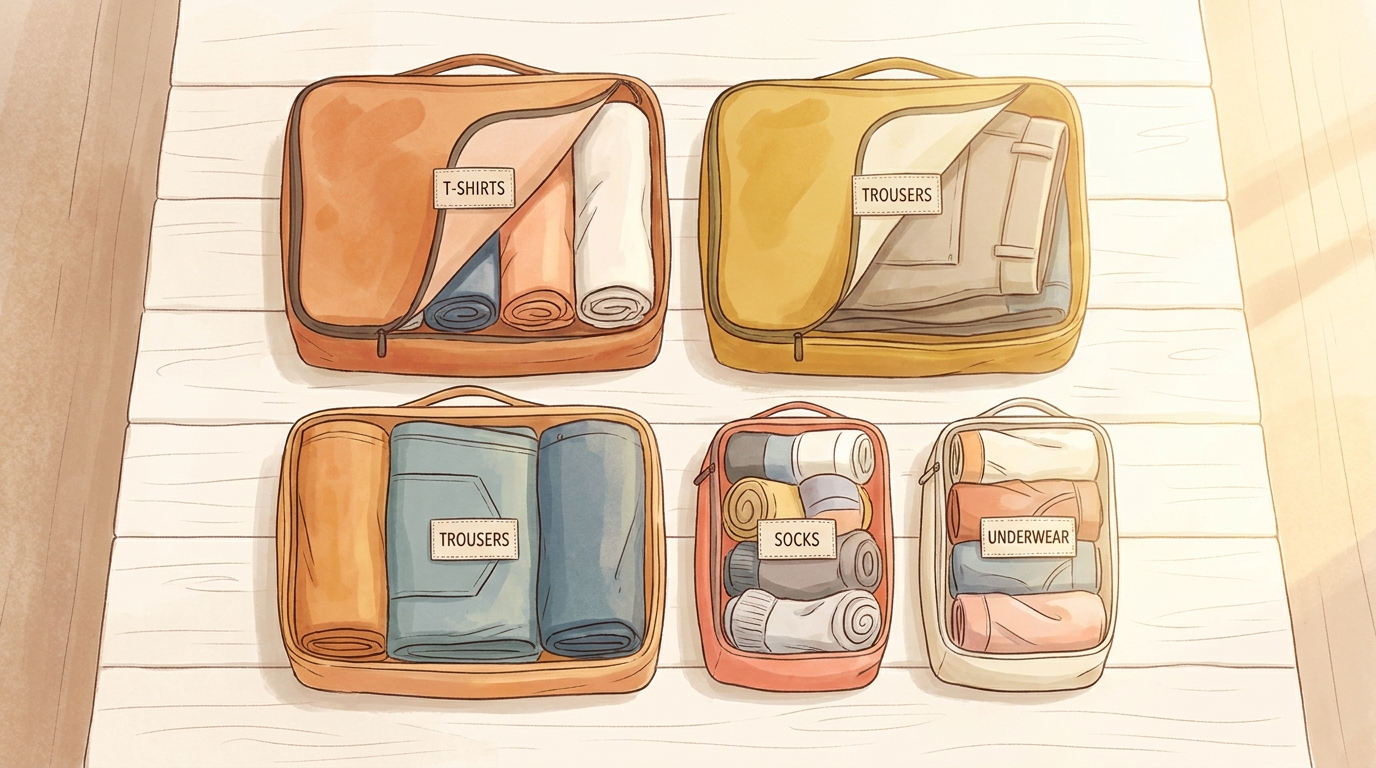
One of the biggest mistakes travellers make with compression cubes is treating them like generic containers. The real efficiency comes from dedicating each cube to a specific clothing category. Here's why: different fabrics compress at different rates. Cotton t-shirts compress well. Denim is harder to compress. Knitwear compresses easily but needs space to breathe.
When you mix clothing types in one cube, you end up under-filling some compartments and over-stuffing others. Packing by category — one cube for tops, one for bottoms, one for underwear, one for socks, one for bulkier items — means each cube compresses as efficiently as it can, and you can find anything instantly when you arrive.
Our Pick: Simplify Living Compression Packing Cubes

Our compression packing cubes set is built around the sizing-by-category principle. Each set includes five cubes, each sized specifically for a different clothing type:
| Cube | Compressed Size | Capacity |
|---|---|---|
| Large Hoodie/Coat Cube | 40cm x 40cm x 4cm | 2-3 sweaters/coats |
| T-Shirt Cube | 26cm x 35cm x 4cm | 7-8 shirts |
| Pants Cube | 30cm x 40cm x 4cm | 5-6 pairs of pants |
| Underwear Cube | 21cm x 31cm x 4cm | 4-5 pairs |
| Socks Cube | 11cm x 33.5cm x 4cm | 7-8 pairs |
Every cube features reinforced double-zips, breathable mesh panels, and easy-carry handles. They're made from ripstop nylon and backed by our 2-Year Wander Ready Warranty — if a zipper fails, we repair or replace it.
How to Pack Your Compression Cubes (Step by Step)
Getting the most out of compression cubes is a skill — but once you've done it once, it takes minutes:
- Fold or roll your clothes. Rolling is generally better for compression — it removes more air and reduces creasing. Fold bulkier items like hoodies neatly to avoid uneven lumps. (See our guide on rolling vs folding.)
- Fill each cube by category. Don't mix clothing types. Stack the folded items flat — avoid bunching or scrunching.
- Close the main (first) zip. This seals the cube. It should close without forcing — if it's too tight, remove one item.
- Press down firmly on the cube. Use your palm to push out trapped air, working from the centre outward. You'll feel the cube flatten noticeably.
- Close the compression (second) zip. While maintaining pressure, run the compression zip around the perimeter. The cube should now be noticeably thinner.
- Pack your cubes into your bag. Lay them flat and stack them — they're designed to tessellate neatly. The structured shape means no wasted corner space.
A few things to avoid: don't overfill the cube before the first zip — the compression zip needs somewhere to go. And don't pack wet clothes; moisture trapped inside a compressed cube over several hours is not ideal.
Who Are Compression Packing Cubes For?
Compression packing cubes work for most travellers, but they're especially useful for:
- Carry-on only travellers who need to maximise a small bag without checking luggage
- Long-haul travellers packing for 2+ weeks who want to bring enough without multiple bags
- Family travellers who need to pack efficiently for multiple people across a limited number of bags
- Business travellers who want to arrive with wrinkle-free clothes ready to wear
They're less essential if you're packing for a short trip with plenty of luggage space and no weight concerns. Still weighing it up? Our honest take on whether packing cubes are worth it and whether packing cubes actually save space will help you decide.
Frequently Asked Questions
What is the difference between compression packing cubes and regular packing cubes?
Regular packing cubes organise your clothes into compartments but don't reduce their volume. Compression packing cubes have a second zip that, when closed under pressure, compresses the contents and removes excess air — reducing the cube's volume by up to 60%. If luggage space is your priority, compression cubes are significantly more effective.
Do compression packing cubes actually save space?
Yes, meaningfully so — particularly for soft clothing like t-shirts, underwear, and knitwear. Denim and structured items compress less, but even those benefit from being neatly contained. Most travellers find they can fit roughly one extra outfit's worth of clothing compared to unpacked or cube-only packing.
Will compression packing cubes wrinkle my clothes?
The cubes themselves don't cause wrinkles — movement does. By holding clothes firmly in place during transit, compression cubes actually help reduce travel wrinkles compared to loose packing. Rolling clothes before packing further minimises creasing.
Can I use compression packing cubes in a carry-on bag?
Yes. Our five-cube set is sized to fit within most standard carry-on bags and large backpacks. The largest cube (40cm x 40cm when compressed flat) fits comfortably in the main compartment of a standard carry-on.
How do I clean compression packing cubes?
Wipe with a damp cloth and mild detergent. Avoid machine washing — it can stress the zippers and fade the colour over time.
Ready to pack smarter? Our Compression Packing Cubes come in multiple colours and are backed by a 2-year warranty. Browse the full packing cubes range to find your set.

Leave a comment
This site is protected by hCaptcha and the hCaptcha Privacy Policy and Terms of Service apply.